The Evolution and Significance of World Maps: A Case Study
- Travel & Leisure, Vacations
- World Map
- March 3, 2026
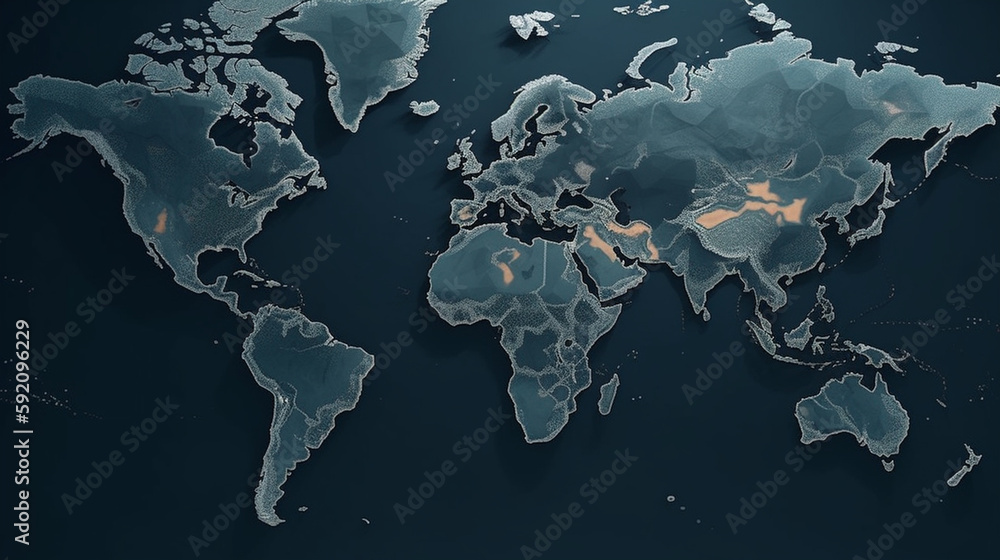
The world map is a powerful tool that has evolved significantly over centuries, reflecting the geographical, political, and cultural shifts of humanity. This case study explores the history, development, and significance of world maps, highlighting their role in navigation, education, and global understanding.
Historical Background
The origins of world mapping can be traced back to ancient civilizations. The earliest known World Map – map.publicvm.com – is the Babylonian World Map, also known as “Imago Mundi,” which dates back to the 6th century BCE. This clay tablet depicted the known world at that time, with Babylon at its center, illustrating the limited geographical knowledge of the era. The Greeks further advanced cartography, with figures like Anaximander and Ptolemy contributing to the understanding of the Earth’s geography. Ptolemy’s work, “Geographia,” compiled in the 2nd century CE, provided a systematic approach to mapping the world, using a grid system of latitude and longitude that remains foundational to modern cartography.
During the Middle Ages, world maps were often religious in nature, depicting the Earth in a T-O format, with Asia at the top, Europe on the left, and Africa on the right. These maps were less concerned with accuracy and more focused on theological symbolism. The Renaissance marked a turning point in cartography, fueled by exploration and the rediscovery of classical knowledge. The invention of the printing press allowed for the mass production of maps, making them more accessible to the public.
The Age of Exploration
The Age of Exploration in the 15th and 16th centuries brought dramatic changes to world mapping. Explorers like Christopher Columbus and Ferdinand Magellan expanded the known world, leading to the creation of more accurate maps. The Mercator projection, developed by Gerardus Mercator in 1569, revolutionized navigation by providing a way to represent the curved surface of the Earth on a flat plane. This projection became the standard for maritime navigation, allowing sailors to plot straight-line courses.
As European powers colonized vast territories, maps became tools of power and control. Colonial maps often distorted the size and shape of continents to emphasize European dominance. For instance, Africa and South America were frequently depicted smaller than their actual size, reinforcing the notion of European superiority. These maps not only served practical purposes but also played a role in shaping perceptions of the world.
The Modern Era
The 19th and 20th centuries saw further advancements in mapping technology. The advent of aerial photography and satellite imagery transformed cartography, allowing for unprecedented accuracy in mapping the Earth’s surface. The establishment of organizations like the National Geographic Society in 1888 emphasized the importance of maps in education and exploration, promoting the idea that maps could foster a better understanding of global issues.
Today, world maps are more than just geographical representations; they are tools for visualizing complex data. The rise of Geographic Information Systems (GIS) has enabled the integration of various data sets into maps, allowing for dynamic representations of information such as population density, climate change, and economic development. These modern maps can tell powerful stories, highlighting inequalities and challenges faced by different regions of the world.
Educational Significance
World maps play a crucial role in education, providing students with a visual understanding of geography, history, and culture. They serve as a foundation for teaching about global interconnections and the impacts of human activities on the environment. In classrooms, maps are used to illustrate concepts such as trade routes, migration patterns, and geopolitical conflicts.
Moreover, the digital age has transformed how we interact with maps. Online platforms like Google Maps and interactive mapping tools allow users to explore the world in real-time, fostering a sense of global citizenship. Students can engage with maps in ways that were previously unimaginable, from virtual field trips to data visualization projects.
Cultural Perspectives
Maps also reflect cultural perspectives and biases. Different cultures have historically depicted the world in various ways, influenced by their unique worldviews. For instance, some Indigenous maps prioritize spiritual and cultural significance over geographical accuracy. The Australian Aboriginal peoples have long used “songlines,” which are oral maps that guide navigation through the landscape, emphasizing the connection between people and place.
In contemporary discussions about mapping, the concept of “decolonizing maps” has emerged. This movement seeks to challenge Western-centric representations of the world and promote diverse perspectives in cartography. By incorporating Indigenous knowledge and local experiences, cartographers aim to create maps that honor the histories and cultures of marginalized communities.
The Future of World Mapping
As technology continues to evolve, the future of world mapping holds exciting possibilities. Advances in artificial intelligence and machine learning could lead to even more sophisticated mapping techniques, allowing for real-time updates and personalized maps tailored to individual needs. Moreover, the growing focus on sustainability and climate change may drive the creation of maps that prioritize environmental health and social equity.
However, the increasing reliance on digital maps also raises important questions about data privacy and accessibility. As mapping becomes more integrated into our daily lives, ensuring that all individuals have access to accurate and reliable maps will be crucial in promoting informed decision-making and global understanding.
Conclusion
The world map is not merely a tool for navigation; it is a reflection of human history, culture, and knowledge. From ancient clay tablets to modern digital representations, maps have evolved alongside humanity, shaping our understanding of the world and our place within it. As we move forward, it is essential to recognize the power of maps in influencing perceptions and promoting global awareness. By embracing diverse perspectives and leveraging technology, we can continue to use maps as instruments of education, empowerment, and connection in an increasingly interconnected world.